
OrbitEvent
AI-Powered Event Management Platform with tickets generation and QR check-in.
Technology Stack
Orbitevent
Overview
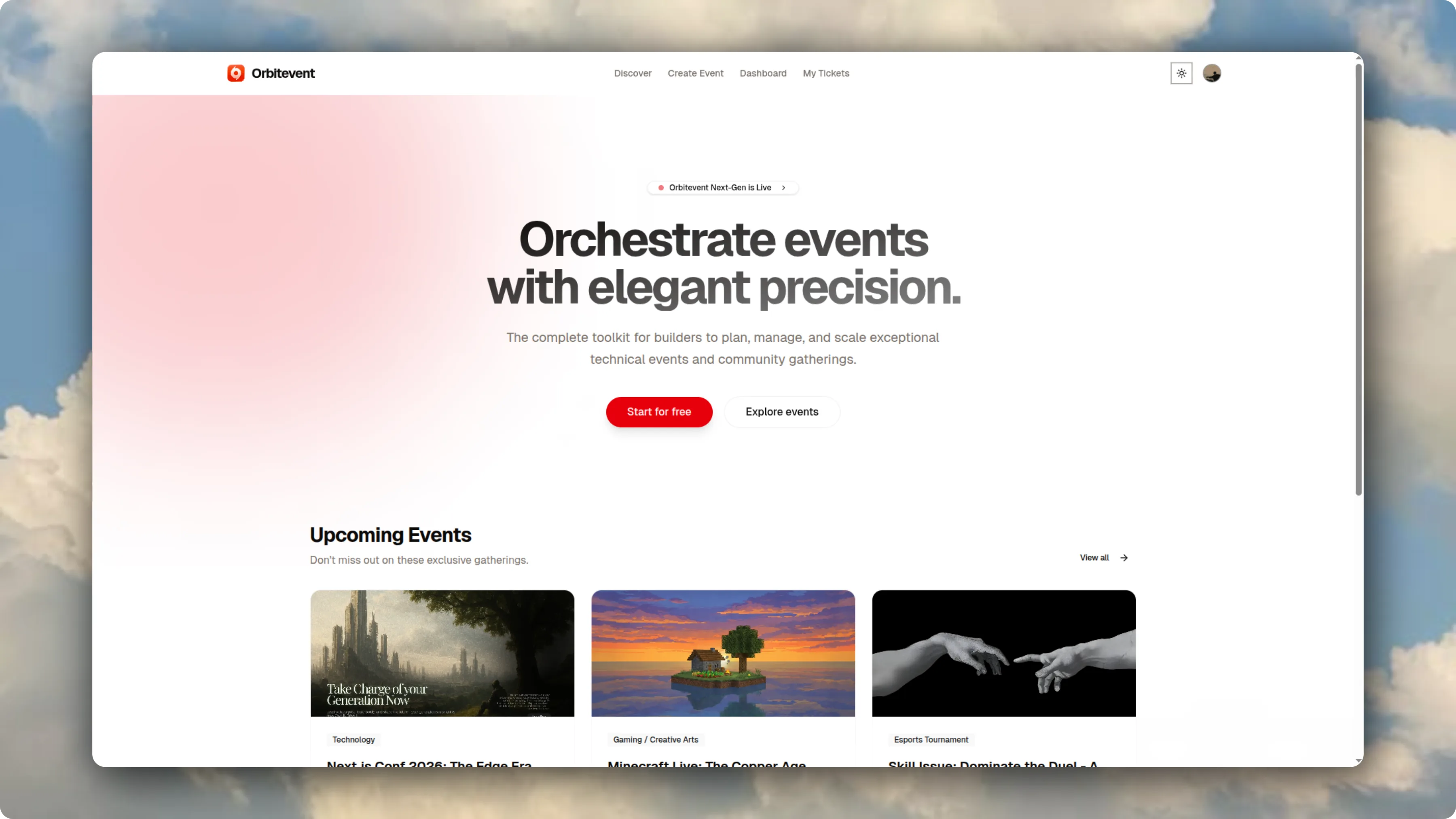
Orbitevent is a comprehensive, AI-powered event management platform designed to simplify the entire lifecycle of an event. From generating event details and ticketing to secure payments and mobile check-ins, it offers a seamless experience for modern event organizers and attendees. It leverages Google Gemini AI to auto-fill event metadata and dynamically suggests multi-tiered ticket pricing.
Why I Built This
I built Orbitevent to address the friction often experienced by independent event organizers when setting up and managing events:
- Cumbersome Setup — Event organizers often spend too much time writing descriptions and configuring ticketing tiers manually.
- Fragmented Tools — Juggling separate platforms for landing pages, ticketing, and on-site check-ins creates operational headaches.
- Payment Unreliability — Ensuring tickets are reliably activated even if a user closes the browser during a payment sequence is a common point of failure.
What Users Can Do
- Purchase Tickets via Stripe — Secure checkout experience that supports various pricing tiers (e.g., Early Bird, General Admission, VIP).
- Access QR Code Tickets — View and manage purchased tickets in a dedicated dashboard, each equipped with a unique QR code for entry.
- Rich Event Content Navigation — Browse and explore rich, formatted event descriptions created via the TipTap editor.
Admin / Organizer Features
- Generate Events with AI — Create complete event details from a single prompt, auto-filling title, description, location, category, dates, and pricing tiers.
- Multi-Tiered Ticketing Management — Create and independently track unlimited ticket tiers with custom names, prices, and capacities.
- Mobile QR Check-in — Organizers can securely scan tickets at the door using the built-in mobile check-in scanner right from their device.
- Event Dashboard — Manage created events, monitor ticket sales visually, and edit event details effortlessly.
Tech Stack
Frontend
- Framework: Next.js 16 (App Router) for hybrid rendering and fast performance.
- Styling: Tailwind CSS 4 combined with Shadcn UI for a premium, accessible, and highly customizable design system.
- Rich Text: TipTap Editor for robust, customizable text formatting natively in the browser.
- QR Scanning:
react-qr-codeand@yudiel/react-qr-scanner.
Backend
- Runtime & Logic: Next.js Server Actions to securely run CRUD operations, Stripe SDK, and Gemini logic without increasing client bundle size.
- Database: MongoDB with Mongoose for flexible, document-based storage that adapts to complex event metadata and ticket structures.
- Authentication: Clerk for secure, effortless user identity and session management.
- Payments: Stripe Checkout & Webhooks for processing payments and managing the multi-step verification ticketing lifecycle.
- AI: Google Gemini API for structural generation.
Technical Implementation
Dual-Fulfillment Architecture for Payments
To gracefully handle edge cases where a user pays but closes their tab prematurely, I implemented a dual-fulfillment architecture:
- Webhook (Primary): A listener continuously running on the server to catch Stripe checkout success events and activate the pending ticket asynchronously.
- Verify API (Fallback): A highly-available secondary check built directly into the
/payment/successpage, verifying ticket state in real-time.
// Payment Flow Lifecycle Outline
User Clicks Buy -> Create Pending Ticket -> Stripe Hosted Checkout
  -> Webhook Activates Ticket (Background)
  -> /payment/success Verifies State
Server Actions for AI Workflows
All calls to the Google Gemini AI for event generation are executed securely via Next.js Server Actions. This protects API keys, ensures robust server-side validation using Zod, and streams instructions perfectly without exposing logic.
Challenges & Solutions
Challenge 1: Structured Output from AI Model
- Problem: Generating complex JSON event structures (with dynamic dates, categories, and varying ticket tiers) using LLMs often results in structurally invalid output that crashes the UI.
- Solution: Designed strict prompt templates combined with Zod schema validation to ensure the response is correctly instantiated before attempting to write to the database or pass state to the client.
Challenge 2: Secure QR Scanning Verification
- Problem: Ensuring tickets couldn't be scanned multiple times or spoofed, leading to "Double Check-in" attacks or unauthorized access.
- Solution: Developed a server-side state verification system bound to the QR scanner component. Each scan cross-references a unique hash against the live database, altering its state to
scannedimmediately to prevent subsequent usage.
Future Plans
- Short-term: Implement an advanced analytics dashboard for organizers (sales graphs, demographics).
- Medium-term: Add attendee management dashboards with role-based access control (RBAC) to support on-site staff.
- Long-term: Integrate automated email and SMS reminders for post-purchase confirmations and pre-event notifications.
TL;DR
Orbitevent is a full-stack, AI-powered platform that revolutionizes event management. By merging Gemini AI to write event copy, Stripe for battle-tested payments, and a sleek Next.js App Router setup, it delivers a deeply polished registration and mobile check-in experience.