
Integrate Advanced AI/ML Into Your Product Roadmap Before the Q1 Rush
The Q1 2026 talent rush is coming. This guide covers the AI talent gap, realistic implementation timelines, and how to actually build AI/ML capabilities that work.
Integrate Advanced AI/ML Into Your Product Roadmap Before the Q1 Rush
The Q1 2026 AI talent rush is already forming. If your organization is still in planning mode, you're not really planning — you're falling behind. This guide covers what the gap actually looks like, how long building real ML capabilities takes, and how to approach it without wasting the first year.
Why 2026 Changes Everything
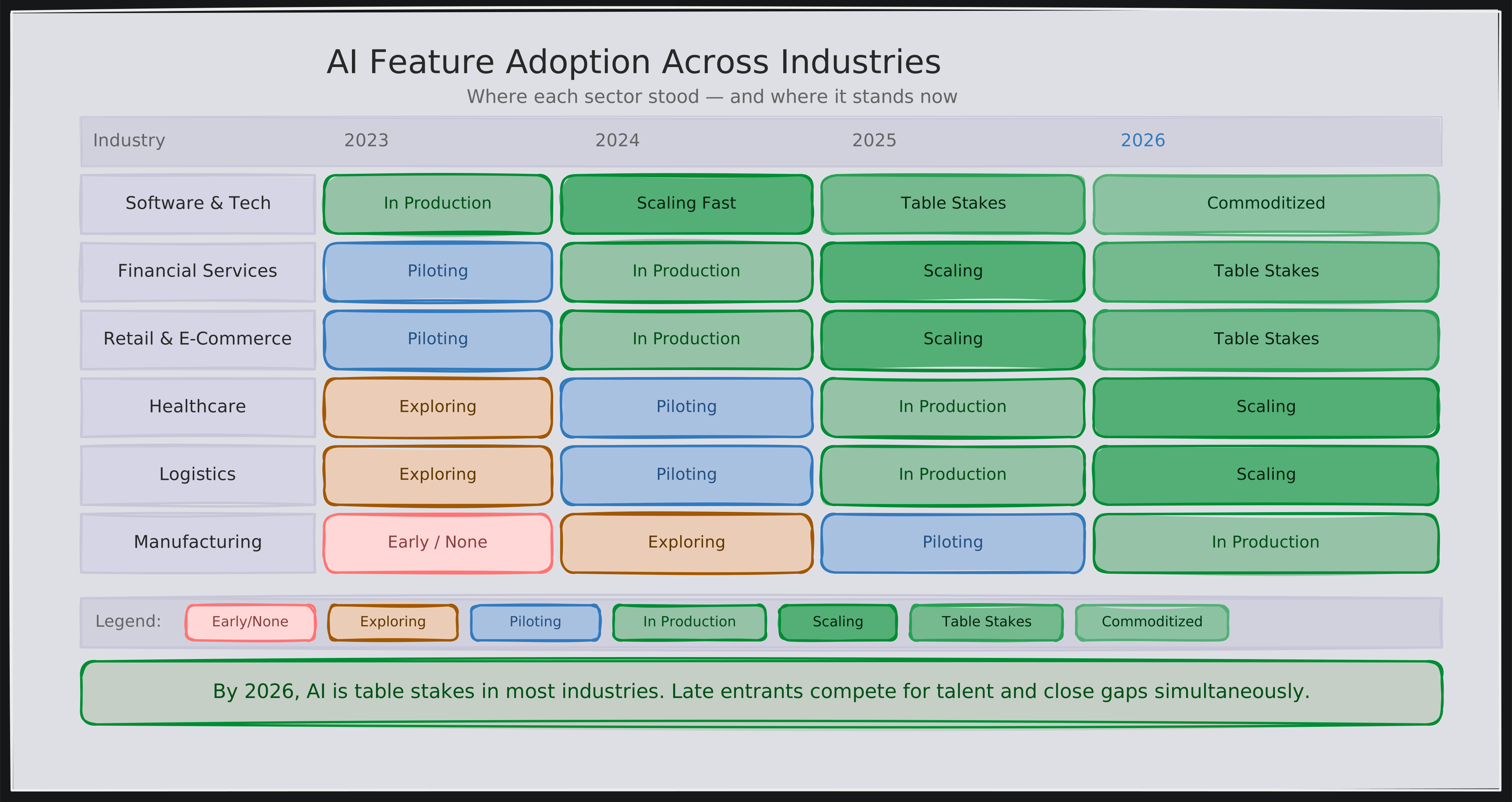
Two years ago, having ML in your product was a differentiator. Now it's closer to a baseline expectation. The companies that were experimenting in 2023 are shipping in 2026. The distance between them and everyone else is growing.
Every industry has moved. Financial services teams are running fraud detection and credit scoring models in production. Healthcare platforms have added triage assistance and diagnostic support. E-commerce has been doing personalization at scale for years — the gap now is between companies doing it well and companies still using rule-based systems. Even manufacturing has AI inside quality control and supply chain decisions, which would have sounded ambitious three years ago.
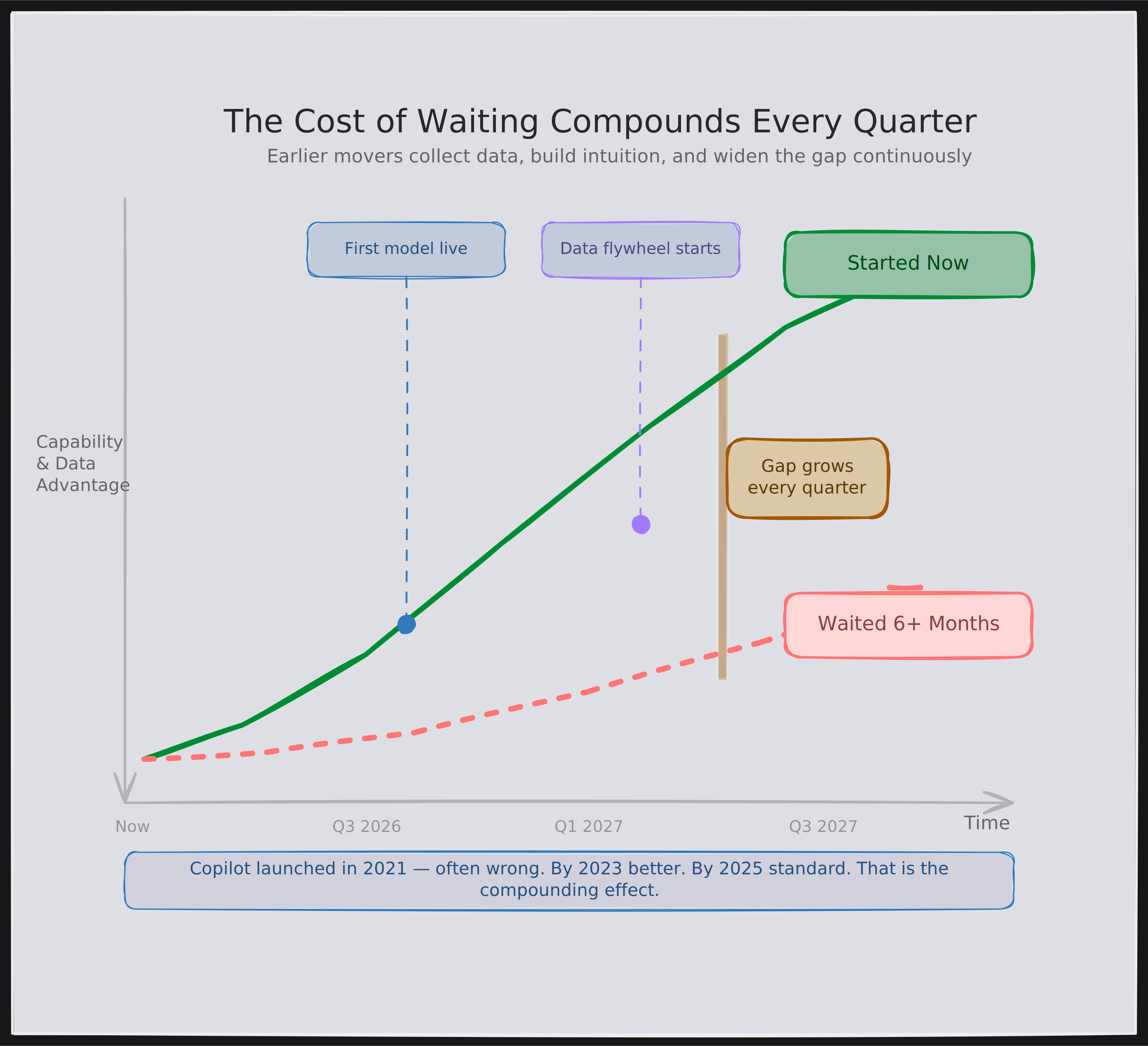
The compounding effect is what makes waiting expensive. Every month a competitor runs their recommendation system, fraud detector, or support classifier, they're collecting labeled data, learning edge cases, and building institutional knowledge about what actually works. You can hire the team later. You can't buy the iteration history.
OpenAI's models didn't get useful overnight — it took years of RLHF data, real user feedback, and continuous tuning. GitHub Copilot got meaningfully better after developers actually used it at scale and the team could see what suggestions got accepted versus rejected. The value compounds with use. Starting later means starting with less.
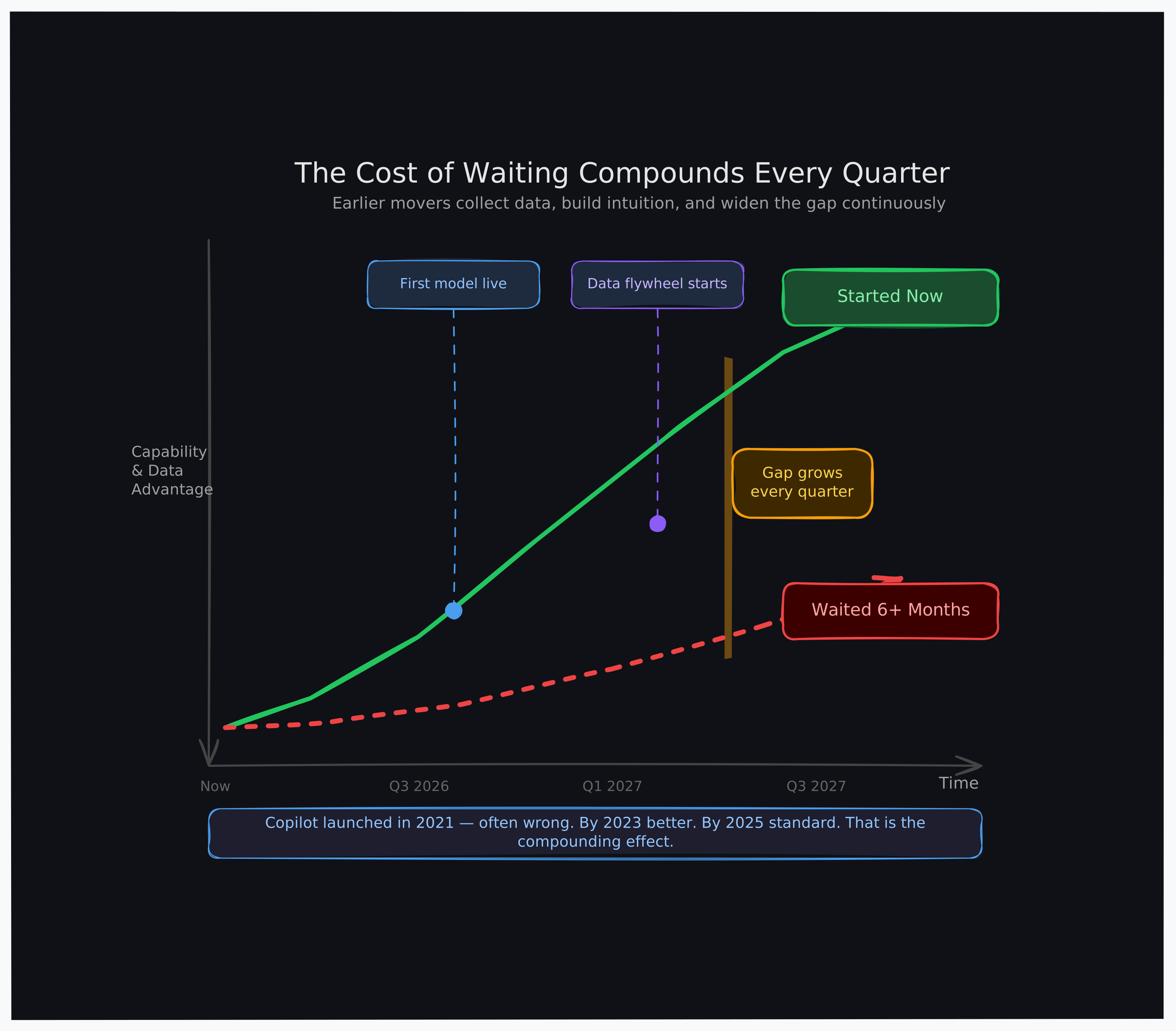
Q1 2026 is not too late. But the window for building something that matters before competitors have a multi-year head start is narrowing. Organizations that commit now still have time to build, learn, and compete.
What AI Actually Does for Products
"AI" as a category is too broad to reason about usefully. When you break it down, there are three concrete things it changes — and understanding them helps you figure out where to start.
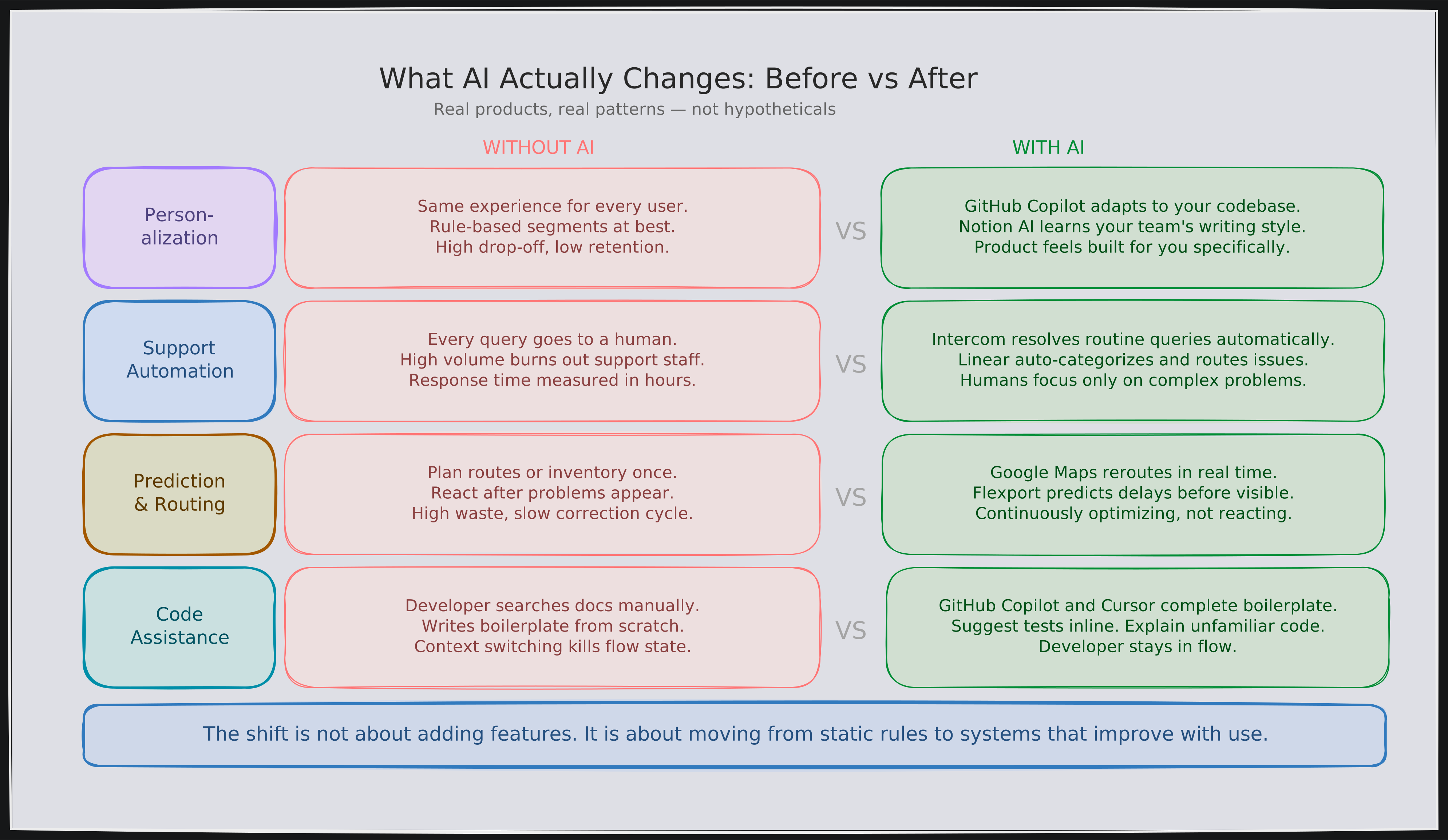
Personalization that adapts to actual behavior. GitHub Copilot doesn't just autocomplete code — it adapts to the patterns in your specific codebase. Notion AI learns from how your team structures documents. The shift is from static rules ("users who clicked X also clicked Y") to systems that adjust based on what an individual actually does. The result is lower churn, higher engagement, and products that feel built for the specific person using them.
Automation that redirects your team, not replaces them. Intercom uses AI to handle a large share of support queries without human involvement — not to cut staff, but so those people can work on problems that actually require judgment. Linear uses AI to categorize and route issues. The pattern is consistent: handle the predictable, repetitive work automatically so your team focuses on what only humans can do well.
Prediction that changes how you operate, not just what you decide. Google Maps doesn't plan a route and hope — it continuously reroutes based on current conditions. Flexport uses ML to predict shipping delays before they become visible. The difference from traditional analytics isn't just speed — it's the shift from reactive to continuously optimizing. You stop trying to predict the future once and start running models that update as conditions change.
The Timeline Reality Check
This is where most AI initiatives run into trouble. The people pitching them underestimate how long production takes, leadership sets expectations accordingly, and patience runs out right around the time the team is actually getting close to something useful.
A production-ready ML system, honestly:
Data Foundation
Collect the right data, clean it, structure it, make it accessible
Infrastructure Setup
Training environments, deployment pipelines, monitoring systems
Model Development
Building models, experimenting with approaches, validating results
Production Refinement
Reliability under real conditions, handling edge cases
Deployment & Scaling
Rolling out carefully, monitoring, optimizing
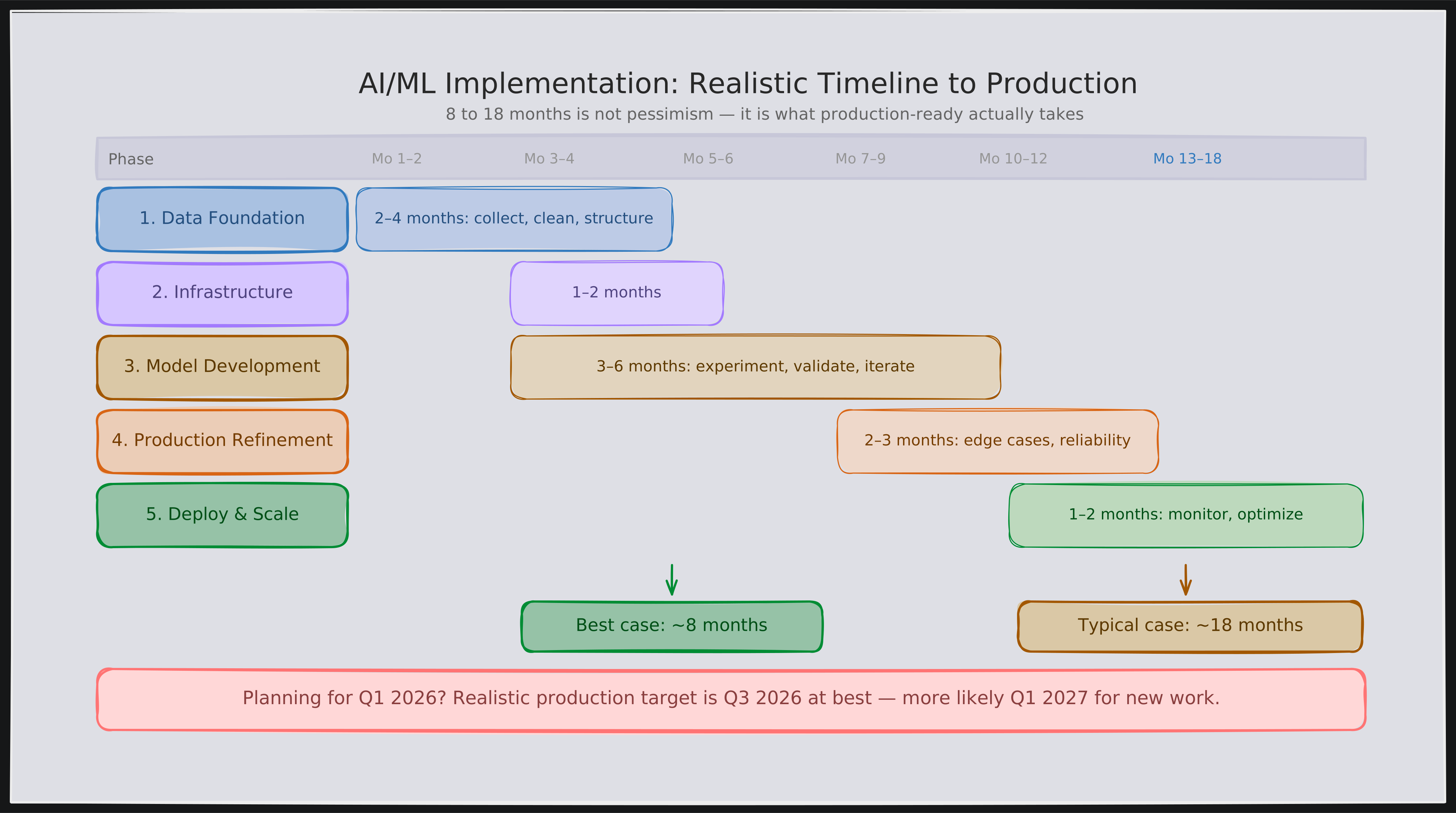
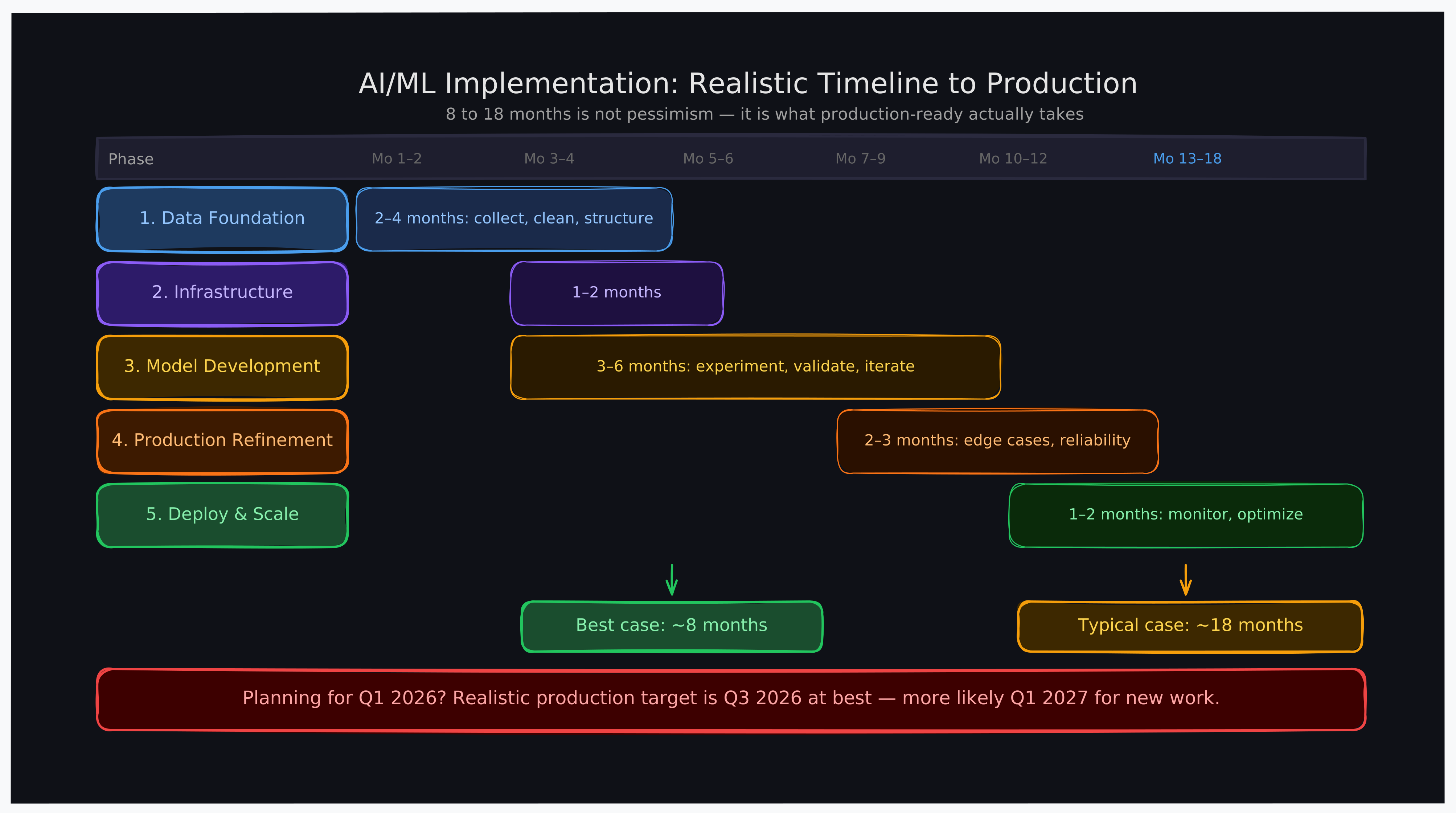
Add it up: 8 to 18 months from commitment to something working in production. If you're planning for Q1 2026, your realistic delivery target for new initiatives is Q3 2026 at the earliest — more likely Q1 2027.
That's not a reason to panic. It's the reason to start now instead of waiting for the right time. Organizations that accept this and plan around it succeed. The ones who try to compress it end up with systems that need expensive rebuilds, or systems that technically ship but don't hold up under real conditions.
Building AI Capabilities the Right Way
Hiring the smartest researchers or using the newest architecture won't save a badly structured team. What matters is having the right roles working together, a clear sense of where to build versus where to partner, and an environment where the actual work can get done.
Understanding the Roles You Need
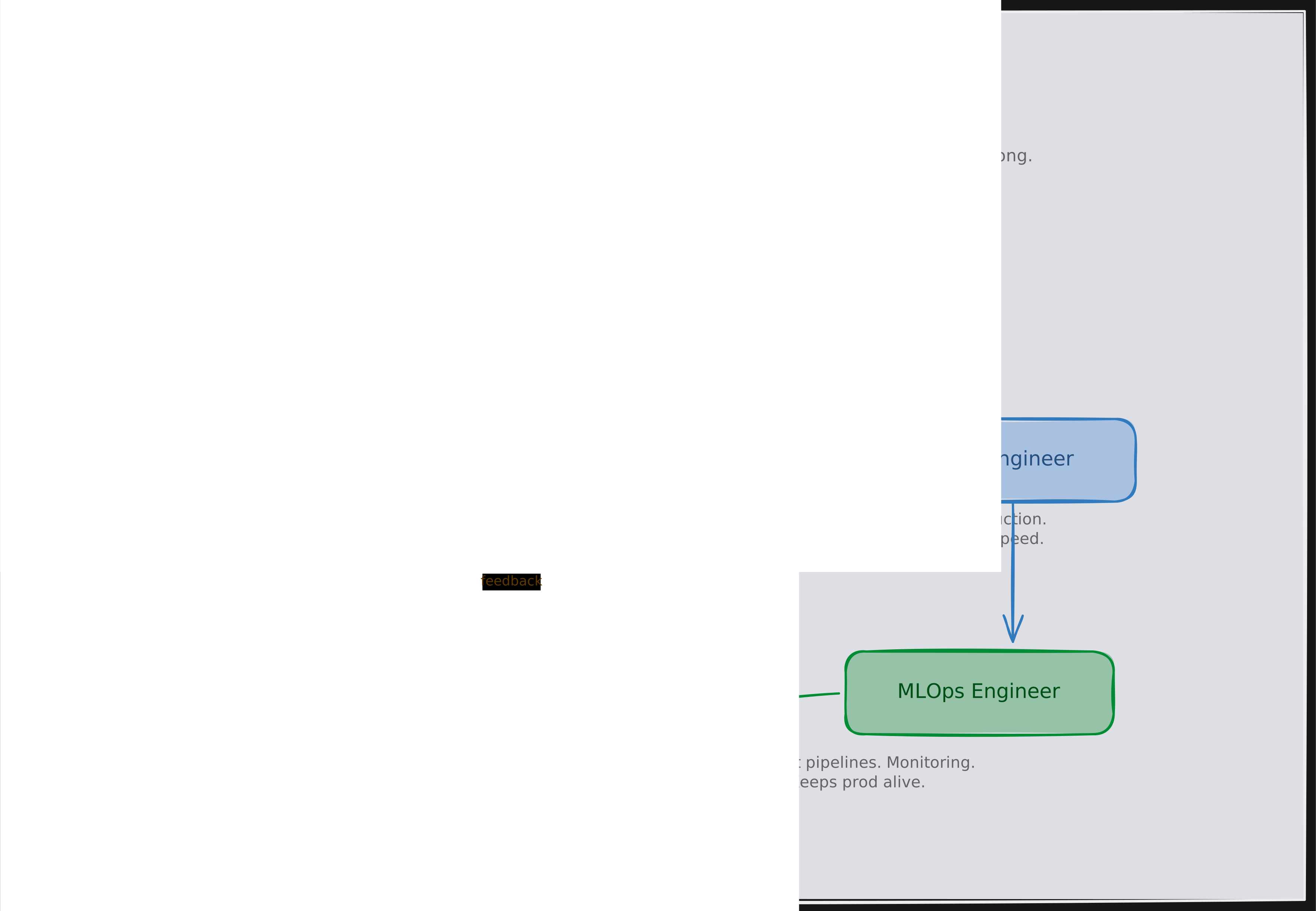
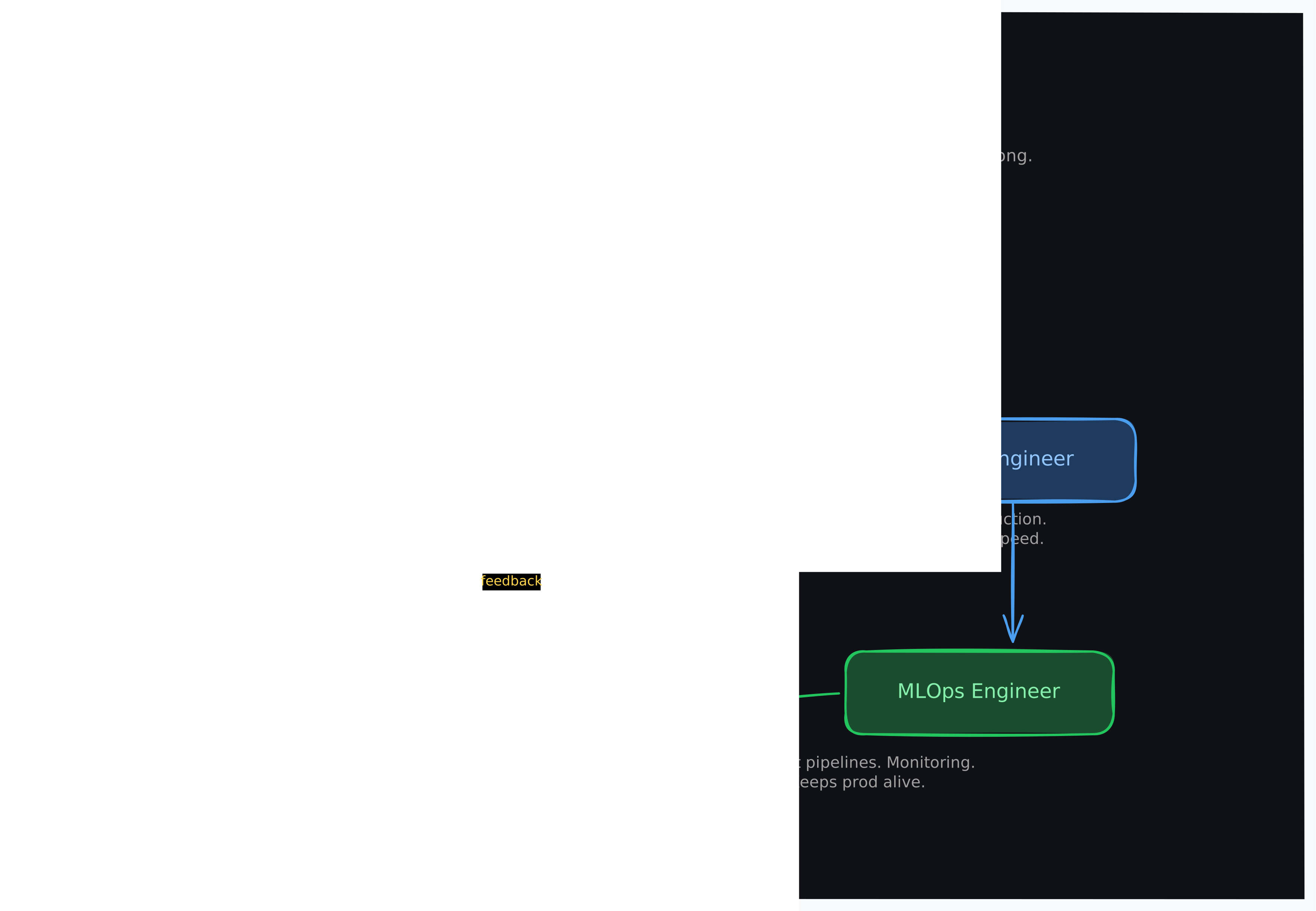
Think of AI teams like a band. You need different instruments playing together. Five lead guitarists sounds impressive until someone asks you to play a song.
ML Engineers take what works in a notebook and make it work at scale, reliably, under real traffic. They're the bridge between experiment and production.
Data Scientists figure out what's possible, design experiments, and iterate toward solutions. The best ones speak both technical and business language — they can explain a model decision to a VP and an architecture tradeoff to a backend engineer without losing either.
AI Product Managers are genuinely rare. They understand what ML can do, what it can't, and how to design product experiences that still work when the model is wrong — because it will be, sometimes. They set honest expectations and stop teams from overpromising.
MLOps Engineers become critical as you scale. They build the deployment pipelines, monitoring systems, and infrastructure that let the team ship model updates without breaking what's already running in production.
The Build and Partner Approach
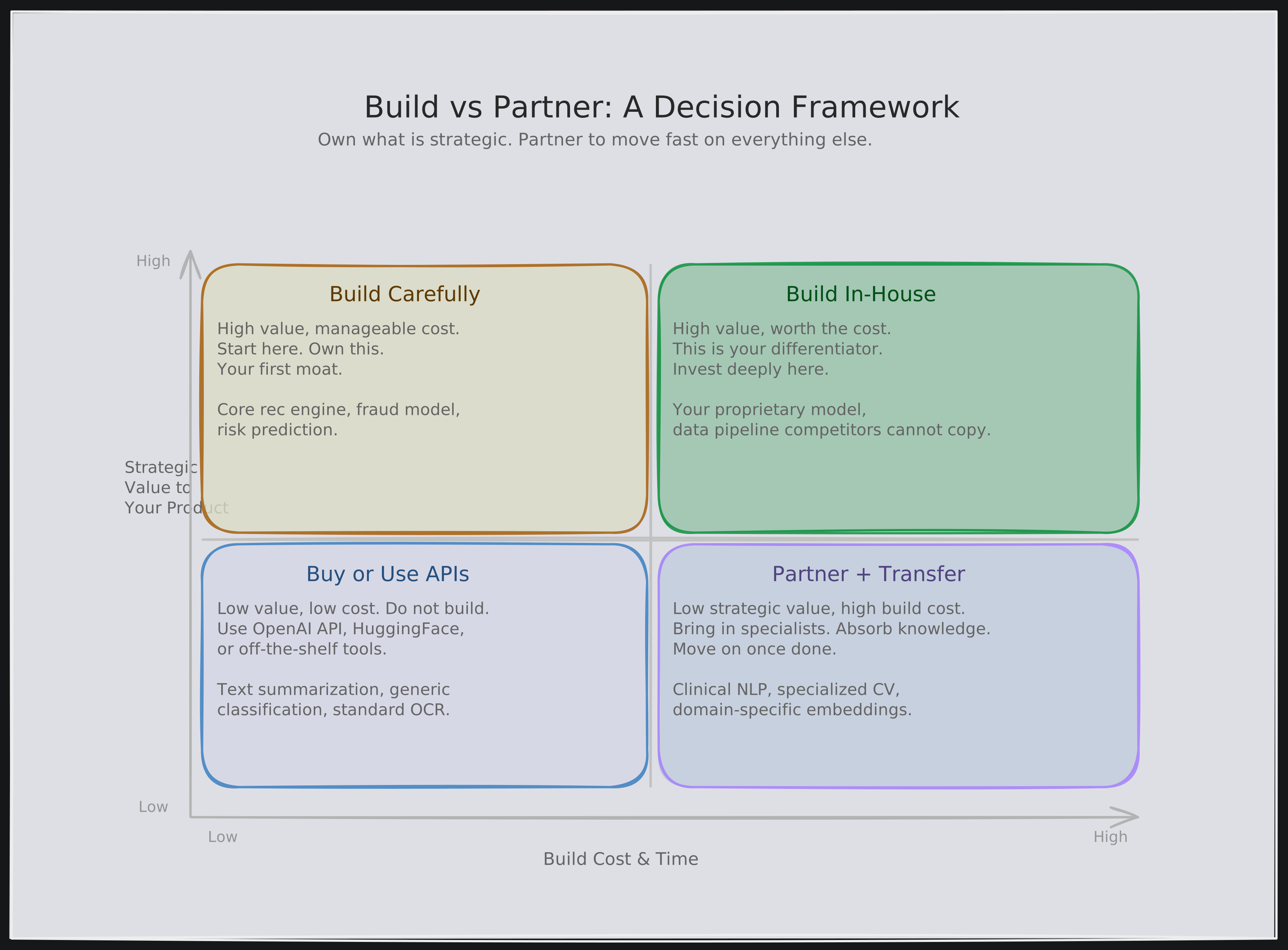
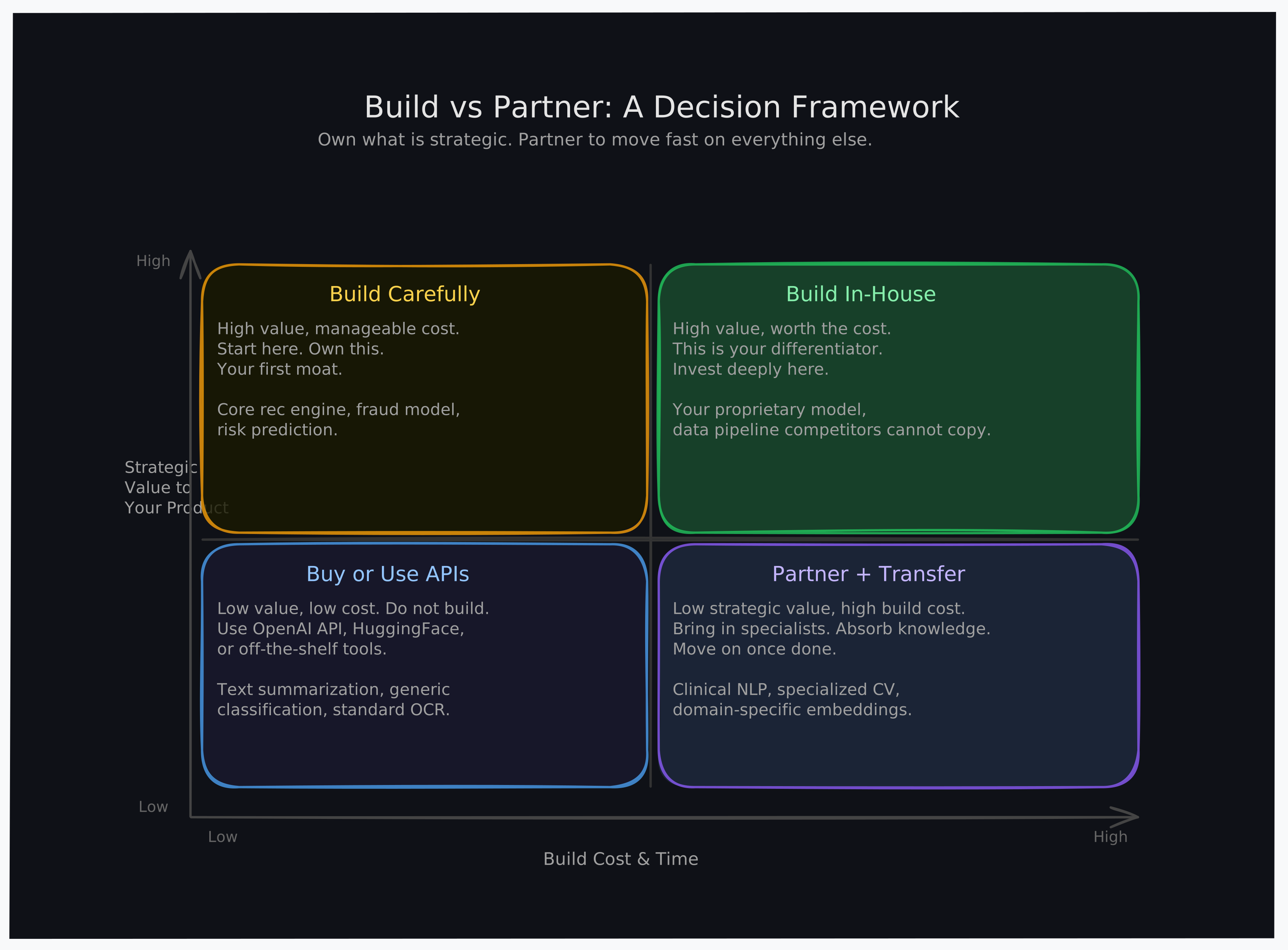
You don't have to choose between building everything in-house or outsourcing everything. The better question is: what is actually your differentiator?
A healthcare company building patient risk prediction should own that model deeply — it's their core product. But they probably don't need to build their own NLP pipeline for processing clinical notes from scratch. Partnering with a specialist for that piece, while transferring knowledge to the internal team throughout the engagement, is usually faster and produces better results than doing everything themselves.
The principle: build in-house where it's strategic. Partner where speed matters and the capability isn't core to your competitive position.
Creating an Environment Where the Work Gets Done
Strong ML practitioners don't leave for a small pay increase. They leave when they can't get things done. What actually matters: hard problems with real stakes, data and infrastructure that works so they're not spending months debugging pipelines before running a single experiment, enough autonomy to try approaches without every decision requiring approval, and colleagues who are genuinely good.
Your job isn't just assembling a team — it's making sure they can do their best work once they're there. That means leadership has to actually commit to AI as a priority, not treat it as a department that runs independently while the rest of the org ignores it.
Getting the Strategy Right
The difference between AI that delivers value and AI that's expensive theater is usually not the model. It's the strategy upstream of the model.
Align with Real Business Value
Before building anything, ask: if this works exactly as planned, what business number moves and by how much? If the answer is fuzzy, you're probably chasing something because it sounds impressive rather than because it solves a real problem.
A common failure pattern: a company builds an AI feature because a competitor announced something similar, without first asking whether it addresses their actual bottleneck. They end up with something technically functional but commercially irrelevant — solving a problem that wasn't the real constraint.
The better question is always: what is the most painful, high-volume, measurable problem we have right now, and is there an ML approach that addresses it? Starting there consistently produces better ROI than starting with "we should be doing AI."
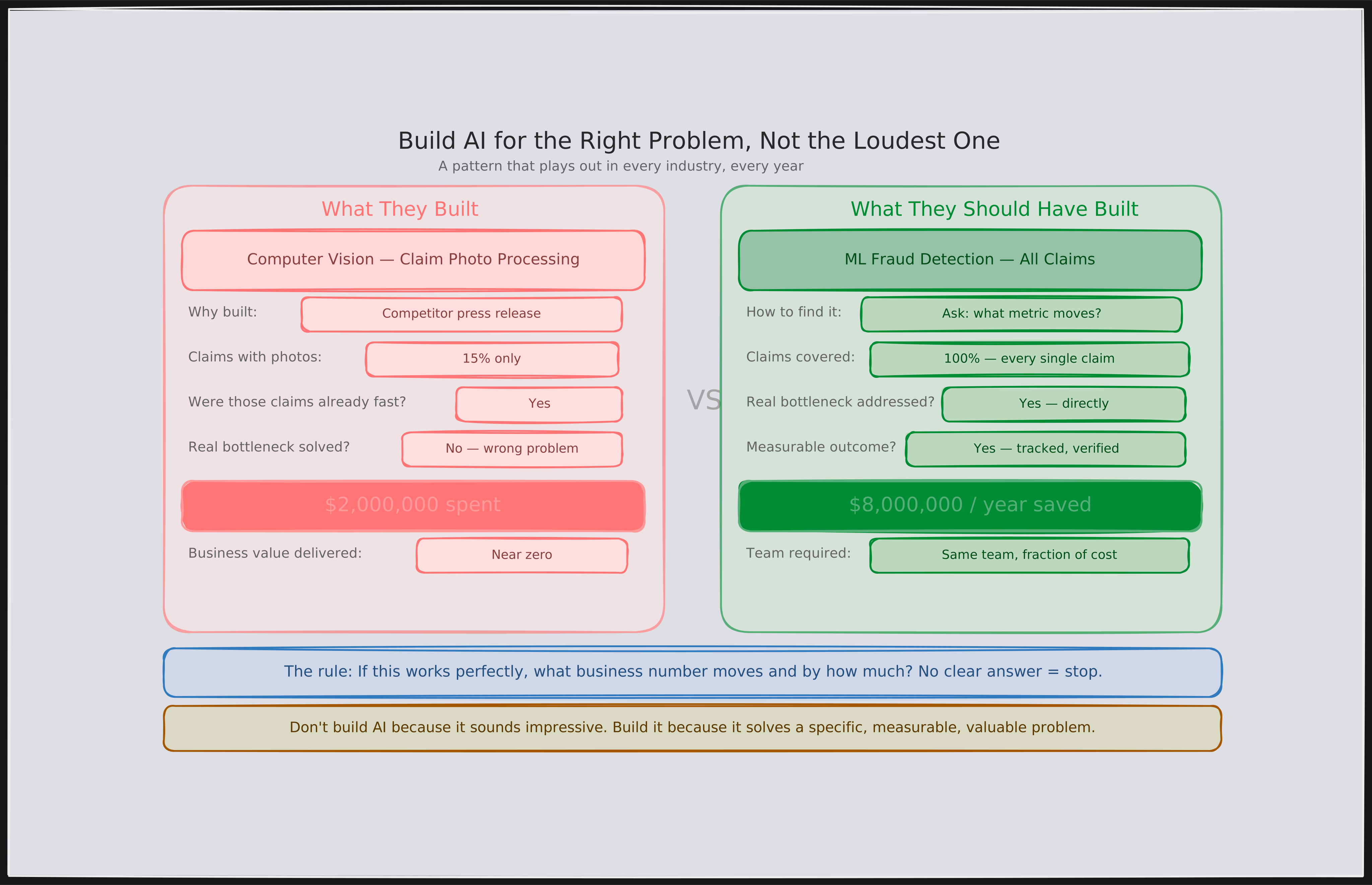
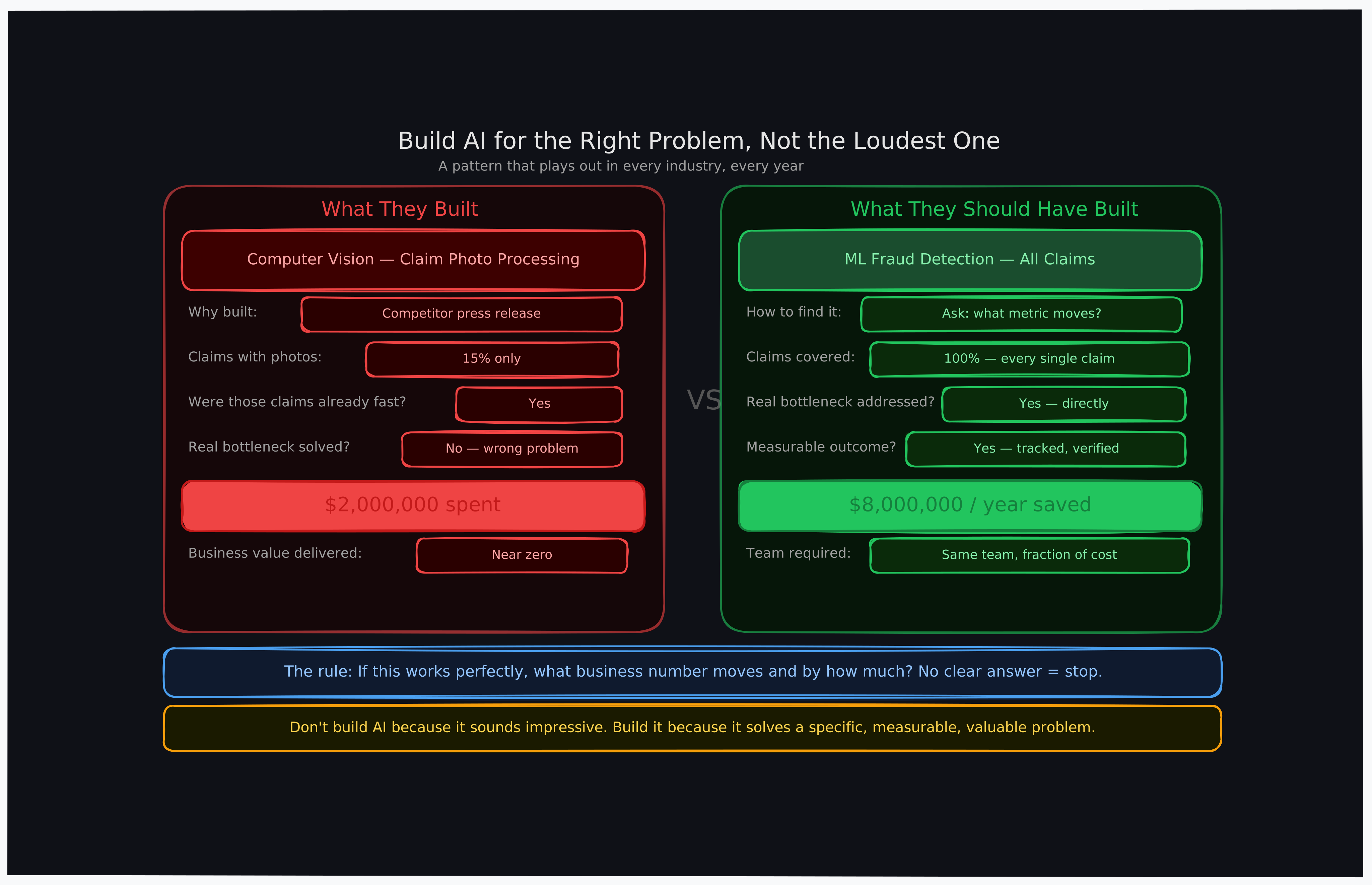
Don't build AI because it sounds impressive. Build it because it solves a specific, measurable, valuable problem.
Infrastructure That Actually Supports the Work
You need reliable data pipelines that collect, clean, and deliver data at scale. Training environments with real compute. MLOps tooling for deployment, versioning, and experiment tracking — Weights & Biases, MLflow, and similar tools exist for good reasons. Monitoring systems that catch when models start degrading or data distributions shift in production. Feature stores so teams can reuse work across projects instead of rebuilding the same transformations every time.
None of this is glamorous. All of it is necessary. Teams that skip it spend their first year firefighting instead of building.
Balancing Exploration and Delivery
One allocation that works: roughly 70% of team time on defined roadmap work, 20% on exploratory projects with clear business relevance, 10% on learning and research. This keeps you shipping consistently while leaving room for experiments that occasionally become the next roadmap item. It also helps with retention — strong practitioners want both impact and intellectual space.
Responsible AI From the Start
Bias, explainability, data privacy, appropriate human oversight — these are not things you add later. Adding them to a system that wasn't designed for them is expensive and sometimes impossible without a rebuild. The teams that bake these in from day one spend less time retrofitting and have fewer production incidents.
Learning From Common Mistakes
Chasing the Latest Architecture Instead of the Right Tool
LLMs are impressive. They're also not the right answer for most ML problems. A gradient boosted tree often outperforms a fine-tuned language model for structured tabular prediction, runs faster, costs less, and is easier to explain to a regulator. The question is never "what's new?" It's "what actually solves this problem well?" Boring AI that works reliably beats impressive AI that sort of works.
Underestimating How Much Data Quality Matters
The most common reason a production ML system underperforms is not the algorithm — it's the data. Inconsistent labeling, missing values handled differently across systems, training distributions that don't match production distributions. Teams spend months trying different architectures when the actual problem is that their data pipeline produces slightly different features in production than in training.
A well-known pattern in demand forecasting: a team builds a sophisticated model, gets mediocre results, and works through alternative approaches for weeks. Eventually they trace the problem to inconsistent timestamp handling between their warehouse system and training data. Fixing the data — not the model — solves it. Same model. Better data.
Data quality is the foundation. Skimping here means nothing else works as expected, regardless of how sophisticated the model is.
Treating Production as Something You'll Figure Out Later
Models that work in notebooks fail in production for predictable reasons: latency requirements, traffic spikes, model degradation over time, upstream data quality issues, feature drift. None of these are surprises. They're just things that don't show up in a notebook.
Teams that design for production from day one — thinking about monitoring, rollback, latency budgets, and data contracts before the model is trained — spend far less time firefighting after launch.
The Cost of Waiting
Each quarter you delay, competitors are running more experiments, collecting more labeled data, and building more institutional knowledge about what works in your domain. The gap doesn't stay constant — it grows.
This is about math, not fear. If a competitor started 18 months ago and you start today, you're not 18 months behind in calendar time. You're behind by 18 months of iteration, data collection, and learning. That gap closes more slowly than the time gap suggests.
Making the Decision to Move Forward
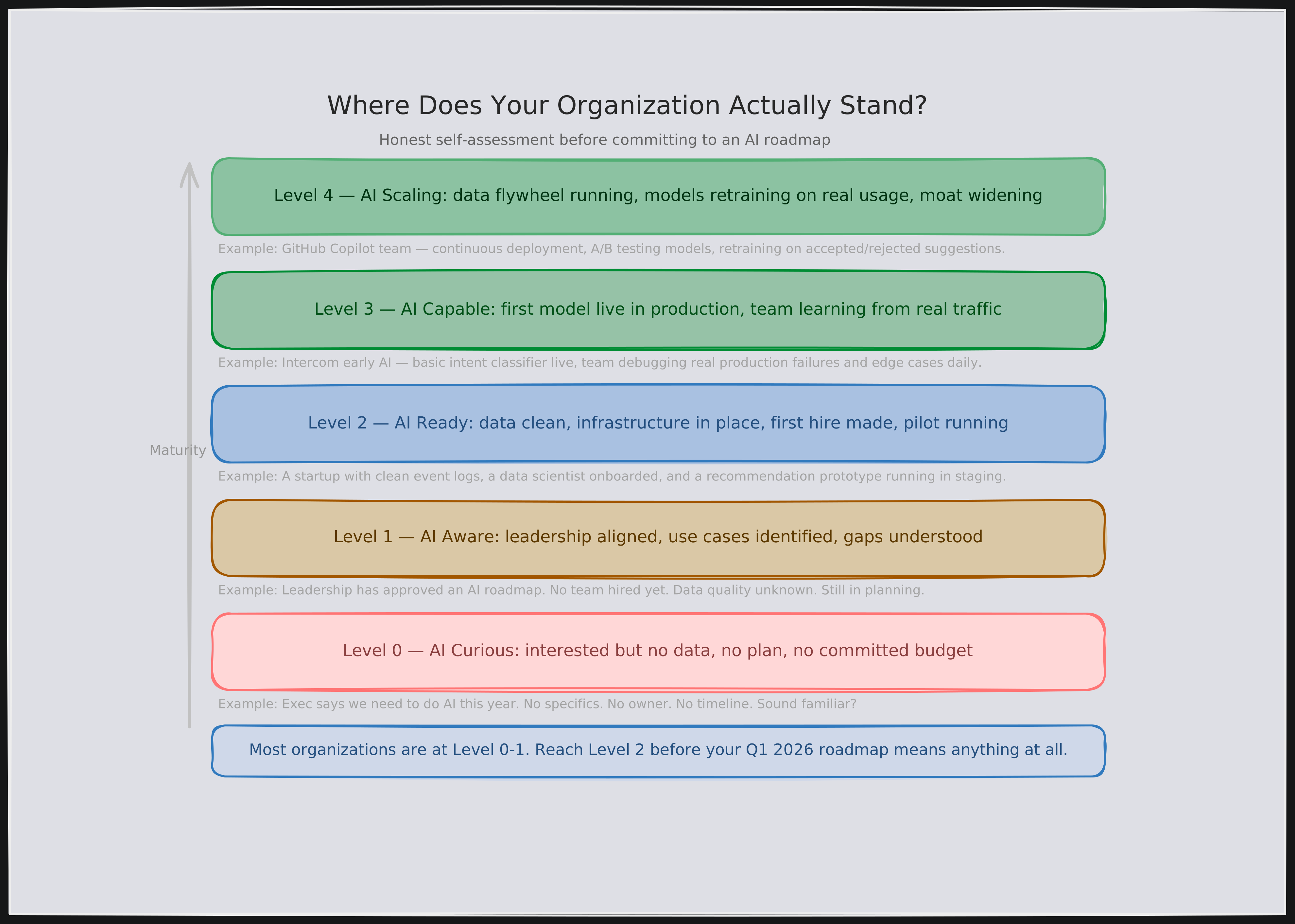
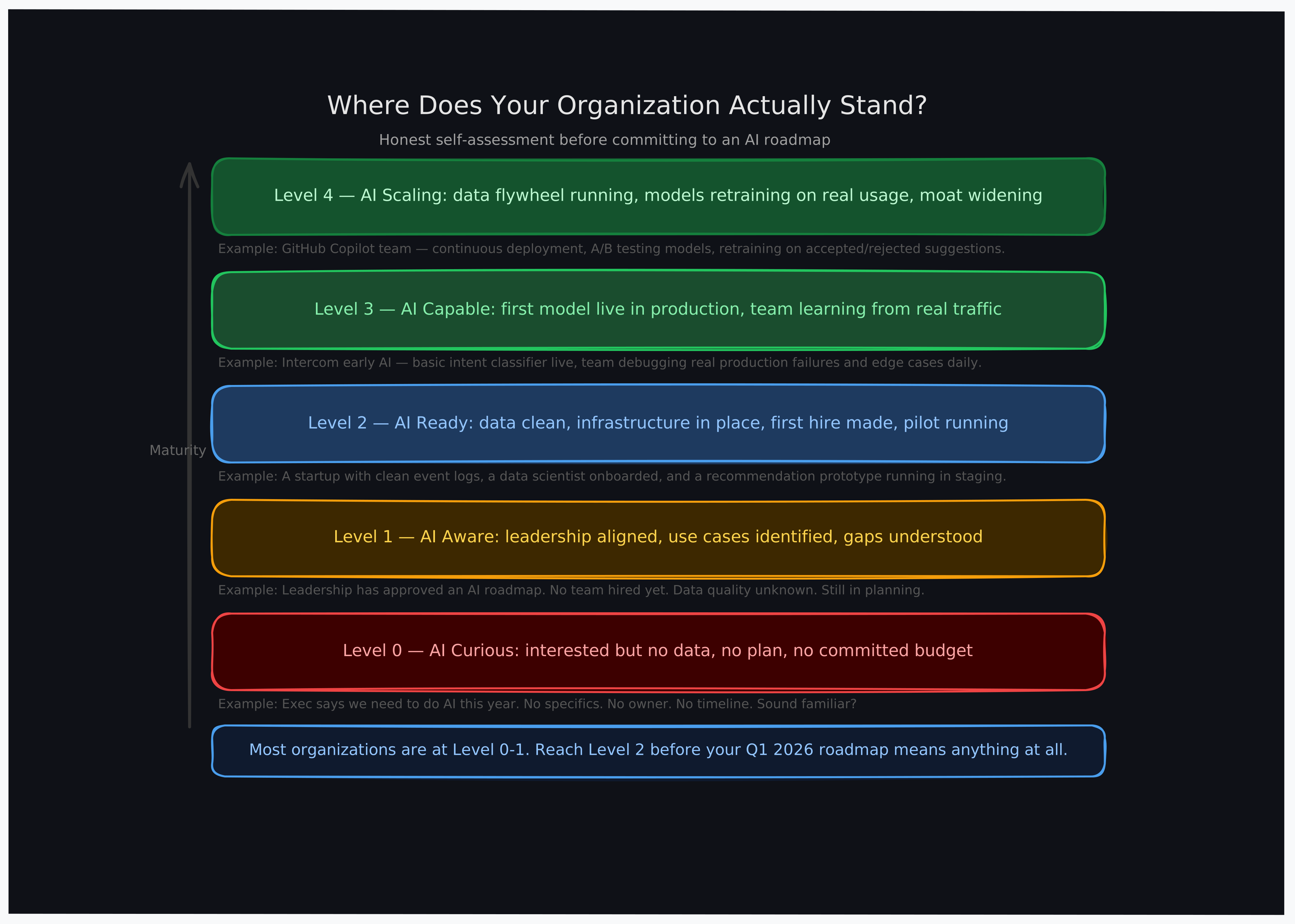
Before anything else, answer these honestly:
- Do you have clean, accessible data for the use cases you're prioritizing?
- Can your current infrastructure support model training and deployment?
- Does anyone on the team have hands-on ML experience, even limited?
- Does leadership genuinely understand that the first version won't be great — and that's expected?
- Are you prepared to invest consistently for 12–18 months before seeing major results?
You don't need perfect answers. You need honest ones, because they tell you what to fix before anything else matters.
Getting Leadership Aligned
AI initiatives die most often not because the technology failed but because a hard quarter triggered a budget review and nobody had set the expectation that this takes time. The fix is honesty upfront: explain the timeline, explain that early versions won't be polished, and explain what success looks like at 6 months versus 18 months. Leaders who understand this from the start stay committed when things get hard — and they will.
Starting Before Everything Is Perfect
GitHub Copilot launched in 2021 and was wrong often. It suggested deprecated APIs. It produced code that didn't compile. Microsoft shipped it anyway, collected real usage data at scale, and iterated. By 2023 it was meaningfully better. By 2025 it was standard tooling for most engineering teams. The value came from starting and learning — not from waiting until the model was ready to launch with confidence.
Your first system won't be your best. That's expected, not a problem. What compounds over time is the learning: the data you accumulate, the edge cases you discover, the institutional knowledge your team builds. You can't compress that by waiting longer to start.
The Path Forward
Q1 2026 is happening whether you're ready or not. The organizations positioning themselves now are building a learning history that will be genuinely hard to replicate later. Those waiting will find themselves hiring in a tighter talent market, competing against systems that have been running and improving for years, and trying to close a gap that grew while they were still planning.
The organizations that come out ahead won't necessarily have the most sophisticated models. They'll be the ones who shipped something reasonable, learned from it, and kept going.
Start now. Start simple. Start learning.
Key Takeaways
Start with the timeline in mind
8–18 months from commitment to production means Q1 2026 planning targets late 2026 delivery
Data quality comes first
No algorithm overcomes bad data. Fix the foundation before tuning the model
Balance building and partnering
Own what is strategic. Partner to move faster on everything else
Design for production early
Latency, monitoring, and maintenance need to be in the design from day one
Commit for the long term
AI initiatives need sustained investment. The value compounds with iteration
Use honest examples
GitHub Copilot, Intercom, Google Maps, and Flexport got good by shipping early and iterating
Act now
The gap between early movers and late entrants grows with every quarter
The demand forecasting scenario in this post is an illustrative composite of common patterns, not attributed to a specific named company. All product examples (GitHub Copilot, Intercom, Google Maps, Flexport, Linear, Notion) reference publicly documented capabilities.